
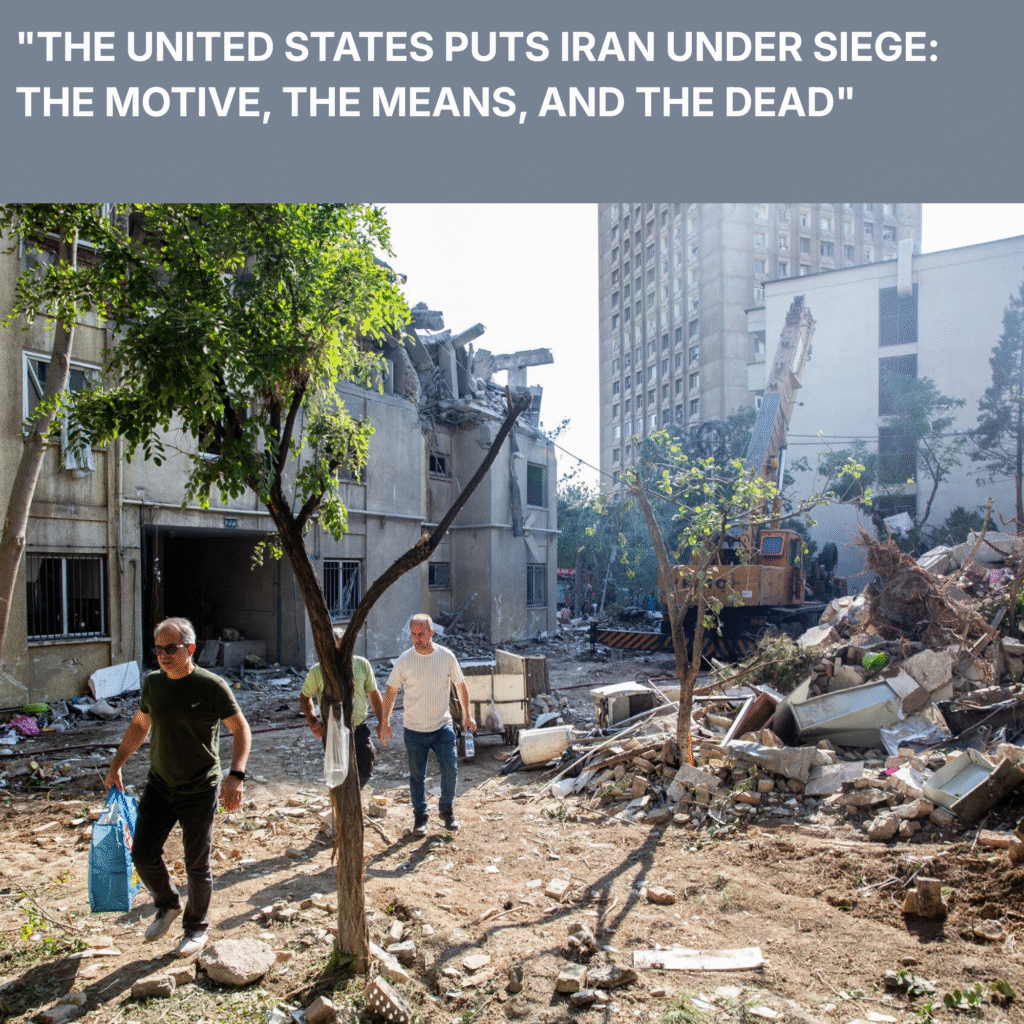
On February 20th, when asked if he was planning on striking Iran with missiles in order to pressure the Iranian government, U.S. President Trump noted that he was “considering it”. At the time, this was just another statement, but on Saturday, February 28th, this statement became reality when the United States and Israel jointly began bombing Iran. With the joint bombing of Iran, not only have civilians been killed, but so has Ayatollah Ali Khamenei, the Supreme Leader of Iran, who has led the Islamic Republic since 1989. These bombings, however, have had consequences beyond the intentions of the United States; these bombings are a signifier of a world at unease and at discontent.
President Trump’s administration, partnered with the country of Israel, undertook a bombing of Iran, in what has been dubbed by the President himself as a war. After growing frustration over the lack of agreement on nuclear talks between the United States and Iran, Trump began his campaign against Iran, citing that it is necessary to destroy the nuclear capabilities of Iran; to destroy Iran’s Navy; to prevent Iran from further or ever developing nuclear weapons; and to prevent Iran from being involved with any form of terrorist cell in or around the Middle East. This has led to the attack of over 1,000 targets in the opening days of the U.S.-led bombings. The U.S. has been using a range of military aircraft with this undertaking, dropping munitions into the heart and homes of Iran; as many as 800 Iranian civilians are presumed or confirmed dead. The first day of the bombings was the day that Iran’s late Supreme Leader was thus killed. Israel, which has viewed Iran as one of its greatest adversaries, joined in on the U.S. bombings, furthering the destruction of Iran. Unsurprisingly, Iran has fought back against these attacks, retaliating by bombing Israel and several other countries that contain U.S. military bases.
Within all of this worldly turmoil, domestic opinions on this newfound war have been tumultuous for President Trump, a negative sign for both his administration and for his further usage of military force across the world. In fact, “Only one in four Americans approves of U.S. strikes on Iran that have plunged the Middle East into chaos, while about half — including one in four Republicans—believe President Donald Trump is too willing to use military force, according to a Reuters/Ipsos poll,” (Reuters poll). Whilst some key figures on the right have approved of Trump’s usage of military force, some have spoken out against it, whilst consistently, those on the left/Democrats have opposed Trump, stating that such a war is being enacted against the will or need of the American people. Trump’s key demographic, with whom he frequently polls well, the Republicans/the right, are more divided than previously thought on this issue, with only 55% approving of the Iranian bombings, according to a Reuters poll. The infrequent and sparse backing/support of Trump’s decision to go to war against Iran is not a healthy signifier for his ambition with this newfound campaign of foreign policy.
The joint U.S.–Israeli bombings of Iran are marking a turning point not only in Middle Eastern geopolitics but also in President Trump’s presidency. What began as political rhetoric has evolved into a full-scale military campaign that, even just within days, has led to profound human, political, and global consequences. The death of Iran’s Supreme Leader and the mounting civilian casualties have further intensified instability abroad, especially within the Middle East. As public opinion remains fractured and international tensions escalate, the long-term ramifications of this war will likely shape both America’s global standing and the political future of Trump’s administration.
About The Author
