
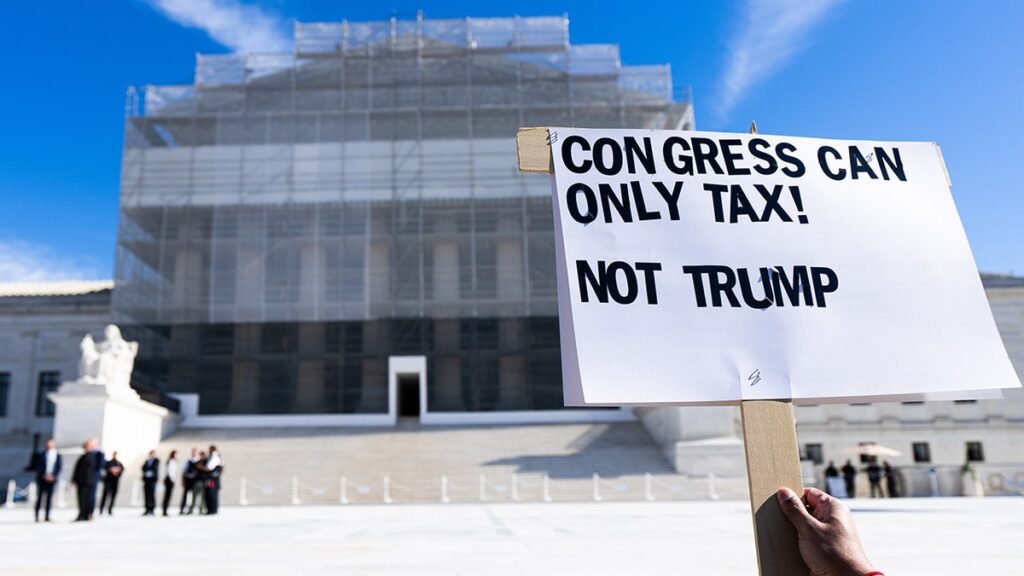
In 1977, the International Emergency Economic Powers Act (IEEPA) was signed into American law by the late Jimmy Carter, allowing for the United States president to regulate international commerce during a national emergency caused by unusual threats from outside the country. Such international commerce included tariffs, which are normally made to be under the power of the United States Congress, which holds the power to deal with taxes, duties, imposts, and excises under Article I, Section 8, of the Constitution. In 2024, when current President Trump ran for the foremost political office of the United States, he frequently mentioned that he would have tariffs imposed on numerous countries, and when he became the president in 2025, he began implementing tariffs via the IEEPA, bypassing Congress. These tariffs became contested early on, and the Supreme Court has officially made a ruling regarding the tariffs as the contested tariffs made their way through the judicial system.
The Supreme Court ruled that the tariffs, which were sweeping in their effect and generated billions of dollars for the U.S. economy, as unconstitutional. The justices, with a heavy Republican majority of 6-3, surprisingly had three Republican justices, including Chief Justice John Roberts, join all three Democrat justices in ruling against the tariffs. The contestation of the tariffs was primarily backed by Democrat politicians and by Democrat citizens, making the three Republican justices joining the ruling a surprise for many. Chief Justice Roberts wrote the majority opinion regarding the new ruling, stating that the tariffs exceeded the law, with the emergency power Trump relied on falling short regarding the tariffs he imposed.
With the ruling, however, the Supreme Court offered very little opinion or clarity on what the Trump administration must do with the money collected already via the tariffs now classified as unconstitutional. The question of refunds was previously mentioned and loomed over the ruling, with the concept of refunds being mentioned by Justice Kavanaugh in his minority opinion, additionally stating that the process of giving out returns, if such a process occurs, would be a “mess”. The Trump administration previously mentioned, before a ruling was given, that such returns would likely be crushing for the United States economy. The administration, and Trump himself, then targeted the Supreme Court ruling with vitriol, claiming that such a ruling was disgraceful.
What shall come from this ruling is yet to be fully known, but much speculation exists. Many left-wing persons praised the ruling, whilst many on the right-wing attacked it just as the Trump administration did. Despite the disagreements between the right and the left, the consequences of the decision, including the concept of offering returns of money collected via the tariffs, are only for the future to hold, especially as the Supreme Court majority opinion provided no guidance for what the presidential administration must do with the billions of dollars collected. With all of this in mind, many Americans and even the federal government must now face a few key questions: what will the effect on the U.S. economy be, how will this affect foreign trade relations, and what will President Trump do now to impose his economic policies? There will come a time when we will all know the answers to these questions, but that time has yet to come.
About The Author
