
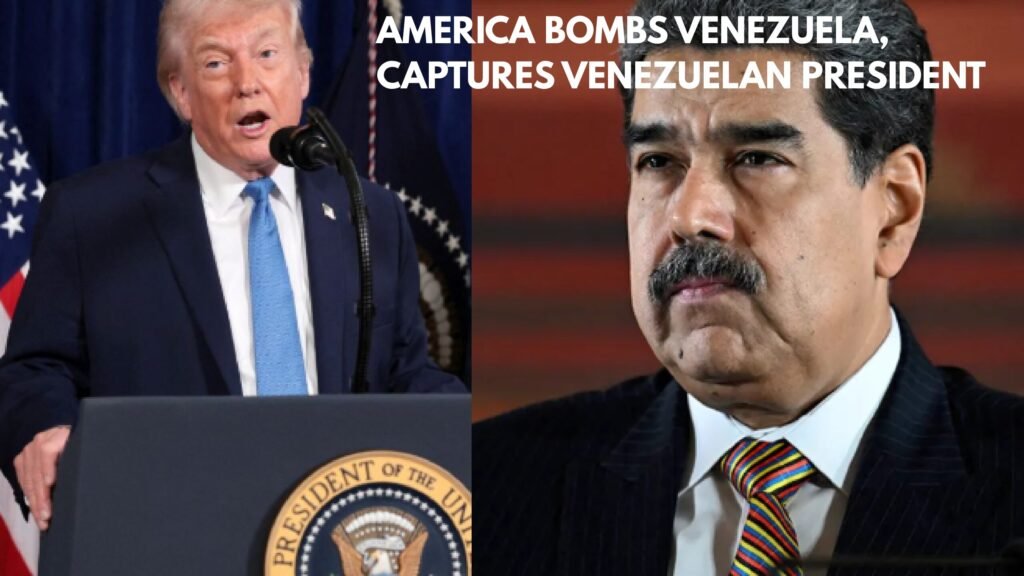
When the current sitting American president, Donald Trump, declared cartels to be terrorist organizations—ones that promote the death and suffering of Americans—near the beginning of his term, many would not have predicted the current state of affairs.
Recently, on January 3rd, 2026, America bombed the country of Venezuela, capturing the Venezuelan president Nicolás Maduro and his wife, Cilia Flores, during the American military operation. This, of course, marked a significant escalation in hostility between the two countries, as throughout September 2025 and onwards, America conducted strikes against drug boats, many near Venezuelan waters, and began the deployment of warships and further strikes on the coast of Venezuela. Although the death count on the January 3rd bombings hasn’t been fully officially released, the number is likely several dozen dead.
Maduro is currently located in New York, awaiting trial in the United States for several charges. He has been indicted on four counts, those being: narco-terrorism conspiracy, cocaine importation conspiracy, possession of machine-guns and destructive devices, and conspiracy to possess machine-guns and dangerous devices. Maduro’s wife, his son, and three others are also being held in the United States and are awaiting trial. Many of these charges stem from allegations held against Maduro, allegations stating that he has promoted and aided cartels’ drug-smuggling operations. Since Maduro was the president of Venezuela, the United States and President Trump have said that the United States would work to help ‘run’ the government of Venezuela, even stating the possibility of American troops being put in place within Venezuela. On January 4th, Delcy Rodríguez assumed the presidential office in Venezuela after being vice-president under Maduro, and has stated that she intends to cooperate with the United States, although she had begun actively campaigning for Maduro to be freed, claiming his capture to be a “kidnapping”.
There has been both support for and denunciation of the United States’ actions toward Venezuela and Maduro, as well as fear of retaliation for the United States’ actions from Venezuela’s allies. Some have supported the actions the United States has taken, claiming that they work to prevent and stop narcoterrorism and that aforementioned actions shall help protect American lives. On the other hand, many have denounced the attack as unnecessary and improper. Further denunciation also stems from claims that the United States has attacked Venezuela due to the country’s vast oil reserves and/or for its socialist government. Claims about the United States attacking Venezuela for the country’s oil have been stoked by President Trump, stating that he intends on revitalizing the Venezuelan oil market, as he claims investing in it could ‘reshape’ the global oil market. Overall, support for the move to bomb Venezuela has been varied and is heavily devided among party lines, with many left-wing persons condemning the attacks, while many of those who are right-wing have actively been supporting them.
As this story develops, many Americans have taken to social media to state their opinions on the state of current affairs, with many asking why this bombing had to take place during the current point in time, a point in time right after New Year’s celebrations, with many stating that this political move indicates that 2026 will be a “bad year”. Some people have even gone so far as to claim that this move against Venezuela will result in a third world war. The sentiment of many is clear, however: that the future is yet undecided, but it is with the decisions President Trump makes towards Venezuela now that could decide many of the major events of 2026.
About The Author
